
SCHOLARSHIP APPLICATION: (Deadline: APRIL 30th, 2027)
Please ensure all fields are filled in completely.To view previous winner: Click Here
(IF YOU HAVE ANY QUESTIONS, PLEASE EMAIL THE PROGRAM ADMINISTRATOR AT RYAN@STUDENTSCHOLARSHIPS.ORG)
Mast Chains
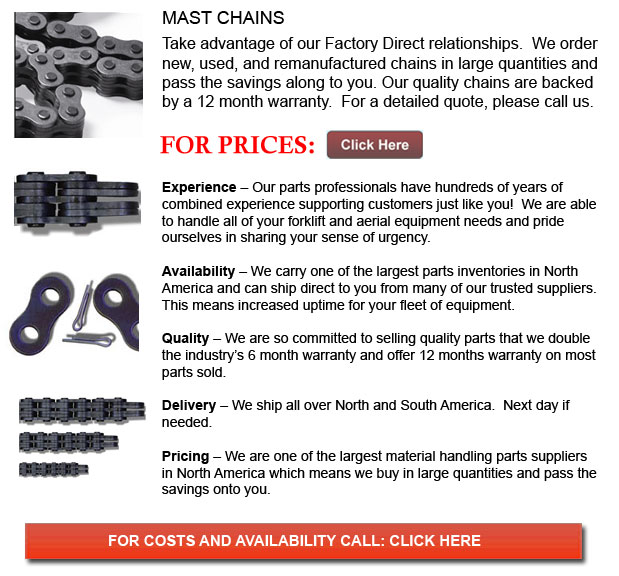

Forklift Mast Chain - Utilized in various functions, leaf chains are regulated by ANSI. They can be utilized for forklift masts, as balancers between counterweight and heads in several machine gadgets, and for tension linkage and low-speed pulling. Leaf chains are at times even called Balance Chains.
Features and Construction
Leaf chains are steel chains utilizing a simple pin construction and link plate. The chain number refers to the lacing of the links and the pitch. The chains have specific features such as high tensile strength for each section area, that allows the design of smaller mechanisms. There are B- and A+ type chains in this series and both the AL6 and BL6 Series contain the same pitch as RS60. Finally, these chains cannot be powered using sprockets.
Selection and Handling
Comparably, in roller chains, all of the link plates maintain higher fatigue resistance due to the compressive stress of press fits, while in leaf chains, just two outer plates are press fit. The tensile strength of leaf chains is high and the maximum acceptable tension is low. Whenever handling leaf chains it is essential to consult the manufacturer's guidebook in order to guarantee the safety factor is outlined and use safety measures all the time. It is a better idea to exercise extreme care and use extra safety guards in functions where the consequences of chain failure are severe.
Using much more plates in the lacing results in the higher tensile strength. Because this does not improve the maximum allowable tension directly, the number of plates used may be restricted. The chains need regular lubrication since the pins link directly on the plates, generating an extremely high bearing pressure. Utilizing a SAE 30 or 40 machine oil is often suggested for nearly all applications. If the chain is cycled over one thousand times daily or if the chain speed is more than 30m for every minute, it would wear really rapidly, even with continual lubrication. Hence, in either of these situations the use of RS Roller Chains will be much more suitable.
The AL-type of chains must only be used under certain situations like for instance if wear is not a huge concern, if there are no shock loads, the number of cycles does not go beyond 100 a day. The BL-type would be better suited under different conditions.
The stress load in parts will become higher if a chain with a lower safety factor is selected. If the chain is likewise used amongst corrosive conditions, it can easily fatigue and break very fast. Performing frequent maintenance is essential when operating under these kinds of conditions.
The outer link or inner link type of end link on the chain will determine the shape of the clevis. Clevis connectors or also known as Clevis pins are made by manufacturers, but the user normally supplies the clevis. A wrongly constructed clevis can decrease the working life of the chain. The strands must be finished to length by the producer. Refer to the ANSI standard or contact the producer.
Click to Download the PDF
Forklift Parts


TOLL FREE: 1-888-695-7994
forkliftpartswestvirginia.com
Email Us
About Us