

SCHOLARSHIP APPLICATION: (Deadline: APRIL 30th, 2027)
Please ensure all fields are filled in completely.To view previous winner: Click Here
(IF YOU HAVE ANY QUESTIONS, PLEASE EMAIL THE PROGRAM ADMINISTRATOR AT RYAN@STUDENTSCHOLARSHIPS.ORG)
Torque Converters for Forklifts
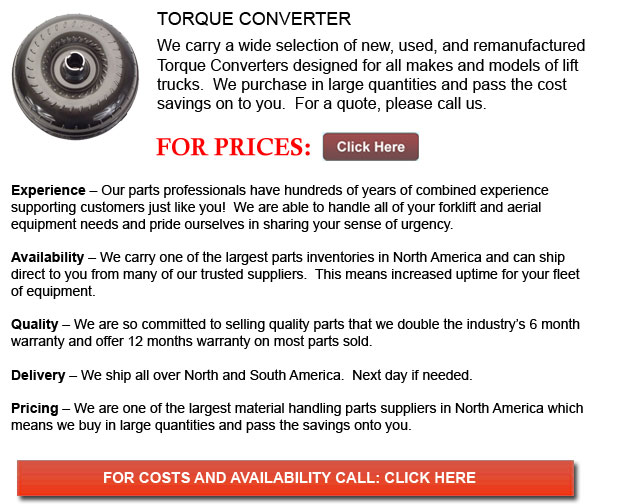

Torque Converter for Forklifts - A torque converter in modern usage, is normally a fluid coupling which is utilized in order to transfer rotating power from a prime mover, for example an internal combustion engine or an electrical motor, to a rotating driven load. Similar to a basic fluid coupling, the torque converter takes the place of a mechanized clutch. This allows the load to be separated from the main power source. A torque converter can provide the equivalent of a reduction gear by being able to multiply torque whenever there is a substantial difference between output and input rotational speed.
The most popular kind of torque converter utilized in auto transmissions is the fluid coupling unit. During the 1920s there was also the Constantinesco or pendulum-based torque converter. There are different mechanical designs used for always changeable transmissions which can multiply torque. For instance, the Variomatic is one type which has expanding pulleys and a belt drive.
A fluid coupling is a 2 element drive which cannot multiply torque. A torque converter has an extra part which is the stator. This alters the drive's characteristics all through occasions of high slippage and produces an increase in torque output.
There are a minimum of three rotating parts within a torque converter: the turbine, which drives the load, the impeller, that is mechanically driven by the prime mover and the stator, that is between the impeller and the turbine so that it can change oil flow returning from the turbine to the impeller. Usually, the design of the torque converter dictates that the stator be prevented from rotating under any condition and this is where the word stator begins from. In point of fact, the stator is mounted on an overrunning clutch. This particular design prevents the stator from counter rotating with respect to the prime mover while still allowing forward rotation.
Modifications to the basic three element design have been incorporated sometimes. These modifications have proven worthy especially in application where higher than normal torque multiplication is required. Usually, these modifications have taken the form of various stators and turbines. Each set has been meant to produce differing amounts of torque multiplication. Several instances comprise the Dynaflow that utilizes a five element converter so as to produce the wide range of torque multiplication considered necessary to propel a heavy vehicle.
Various automobile converters include a lock-up clutch in order to lessen heat and to enhance the cruising power and transmission effectiveness, although it is not strictly part of the torque converter design. The application of the clutch locks the turbine to the impeller. This causes all power transmission to be mechanical which eliminates losses associated with fluid drive.
Click to Download the PDF
Forklift Parts


TOLL FREE: 1-888-695-7994
forkliftpartswestvirginia.com
Email Us
About Us